Bunions
Treatment in Great Dunmow
The Dunmow Bunion Programme.
Manage bunion pain and slow progression with a tailored plan.
Targeted bunions treatment combining custom orthotics, footwear assessment, pain management and surgical referral when needed for lasting relief and healthier feet.
Does This Describe You?
- Painful Bump at Your Big Toe?
A painful, bony bump at the base of your big toe that’s getting harder to ignore?
- Shoes That Used to Fit Don't?
Shoes that used to fit comfortably now rub, pinch or leave you in pain?
- Pain at the End of the Day?
Pain across the ball of your foot or in the bunion itself at the end of the day?
- Getting Steadily Worse?
A bunion that has been slowly getting bigger and more painful over the years?
- Worried About Surgery?
Considering surgery but want to explore non-surgical options first?
- Family History of Bunions?
Bunions run in your family and you want to know what you can do early?
Does this describe you? If so, you’re in the right place. We can’t make a bunion disappear without surgery but we can significantly reduce the pain, slow the progression and help you stay active. For severe cases needing surgery we’ll co-ordinate referral and post-operative care.
The Reality of Bunions That Most Sufferers Don't Realise...
- Shoes Have Become a Battle
The shoes you used to love now sit at the back of the wardrobe. Every shopping trip is a hunt for something wide enough that doesn’t look like ‘comfortable footwear’. Smart shoes for work or weddings are something you endure for as little time as possible.
- The Pain is Building
Some days are fine. Other days the bunion throbs by mid-afternoon and by evening you’re limping. Long walks, standing for a long time, dancing at a wedding all become a pain calculation. The older you get the more it seems to take to recover from a busy day on your feet.
- It's Slowly Getting Worse
Bunions don’t fix themselves. You can see it slowly getting bigger over the years and the second toe is starting to crowd across. You want to know what’s realistically possible without jumping straight to surgery and what you can do now to slow the progression.
Here at Hellier Health, we understand the frustration.
It’s why we created The Dunmow Bunion Programme.
It combines Bunion Care Programme, to address bunions directly.
How Does The Bunions Programme Work?
You start with a thorough assessment of your feet, lower limbs and gait. We examine the bunion, assess the angle and progression, look at how your weight distributes when you walk and review your footwear. You'll leave knowing the stage of your bunion and the treatment options open to you.
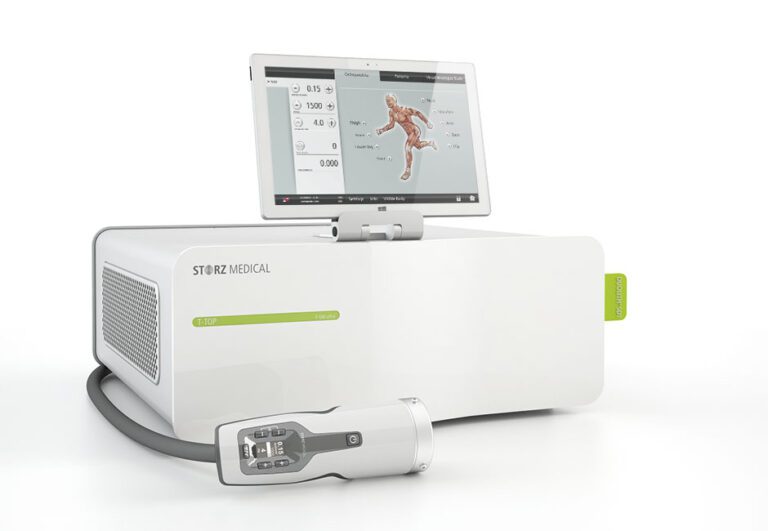
Your treatment plan is put into action with the right combination of techniques for your specific condition. Most sessions take up to 30 minutes. For longer procedures we book a dedicated appointment.

Beyond symptom relief, the focus is on lasting results and resilience. We'll give you a clear at-home programme, footwear advice and self-care guidance to keep your feet healthy long-term. Many patients see us regularly for routine maintenance.
"How Do I Know If This Treatment Will Work For Me?"
Find out whether the bunions programme is right for you by booking a free phone consultation.
Three Common Presentations of Bunions We Successfully Treat
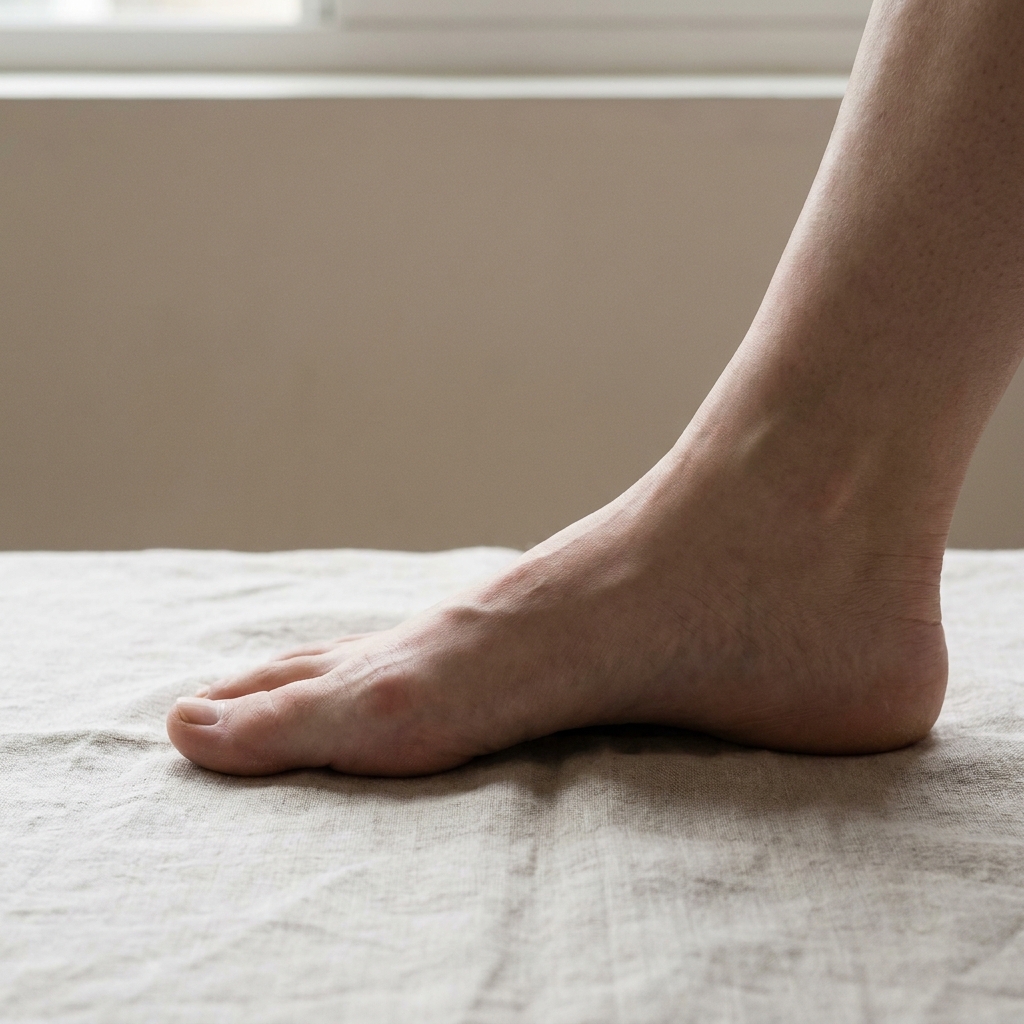
A small bony bump at the base of the big toe with minimal pain and the big toe still mostly straight.
At this stage prevention is the focus. Footwear advice, simple stretches, toe spacers and possibly orthotics can dramatically slow progression.
Many people with mild bunions manage them indefinitely without ever needing surgery.
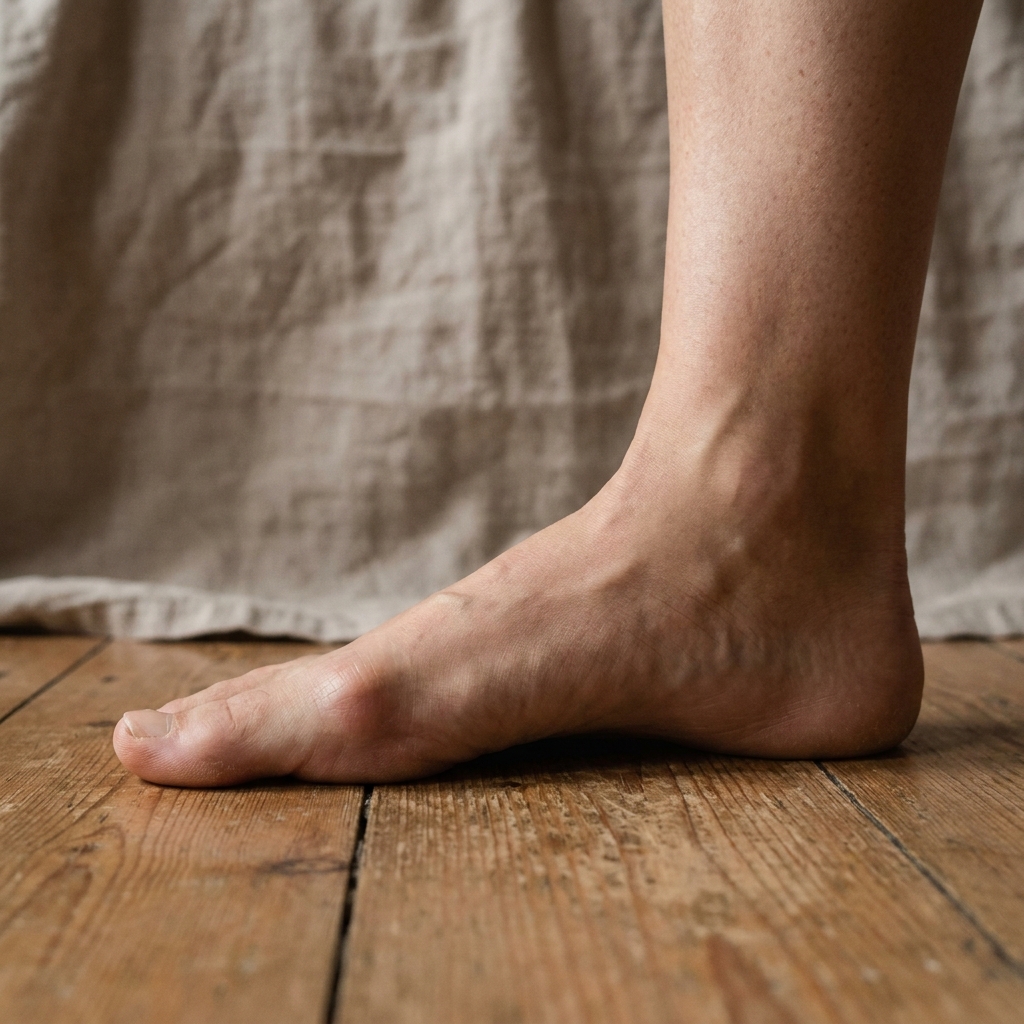
A more visible bony prominence with regular pain, especially after activity or in certain shoes. The big toe may be starting to drift towards the second toe.
Treatment focuses on pain management with custom orthotics to offload the painful area and improve biomechanics, footwear guidance, padding and exercises to maintain mobility and strength.
Most patients see meaningful pain reduction within a few weeks.
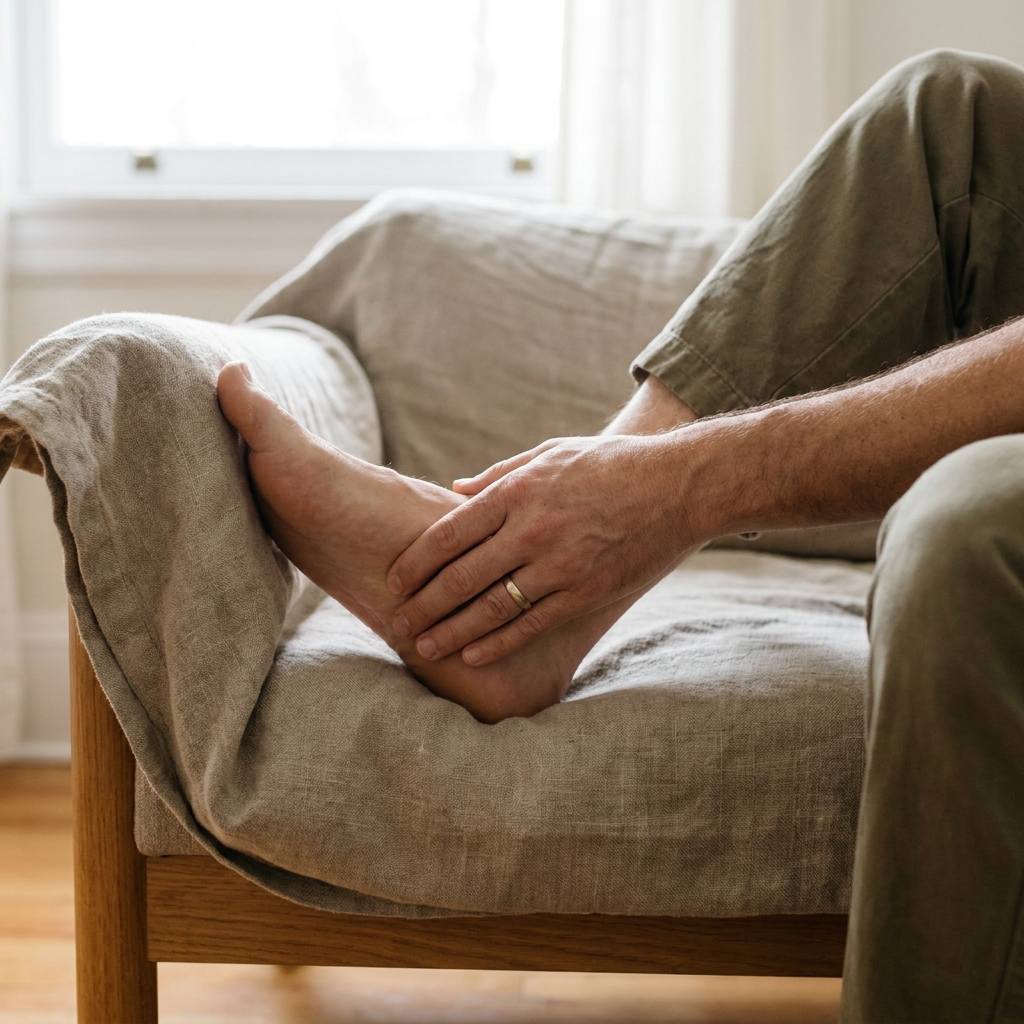
A pronounced deformity with significant pain, big toe crossing over the second toe, difficulty finding any comfortable footwear and possible pain in other parts of the foot from altered weight distribution.
Conservative care can still help with pain in severe cases but won't change the bone structure. We'll discuss whether surgical referral is the right next step.
If surgery is the right path, we'll co-ordinate referral and support you through post-operative rehabilitation.
"How Do I Know If This Treatment Will Work For Me?"
Find out whether the bunions programme is right for you by booking a free phone consultation.
How Does The Bunions Programme Work?
Focused bunion care programme can help treat bunions by addressing the root cause of bunions directly.
It works by delivering bunion care programmes that stimulate the body’s natural healing response to address the underlying problem.
For severe bunions where conservative treatment isn’t enough we co-ordinate referral to an orthopaedic foot surgeon and support you through post-operative recovery.
Want To Learn More?
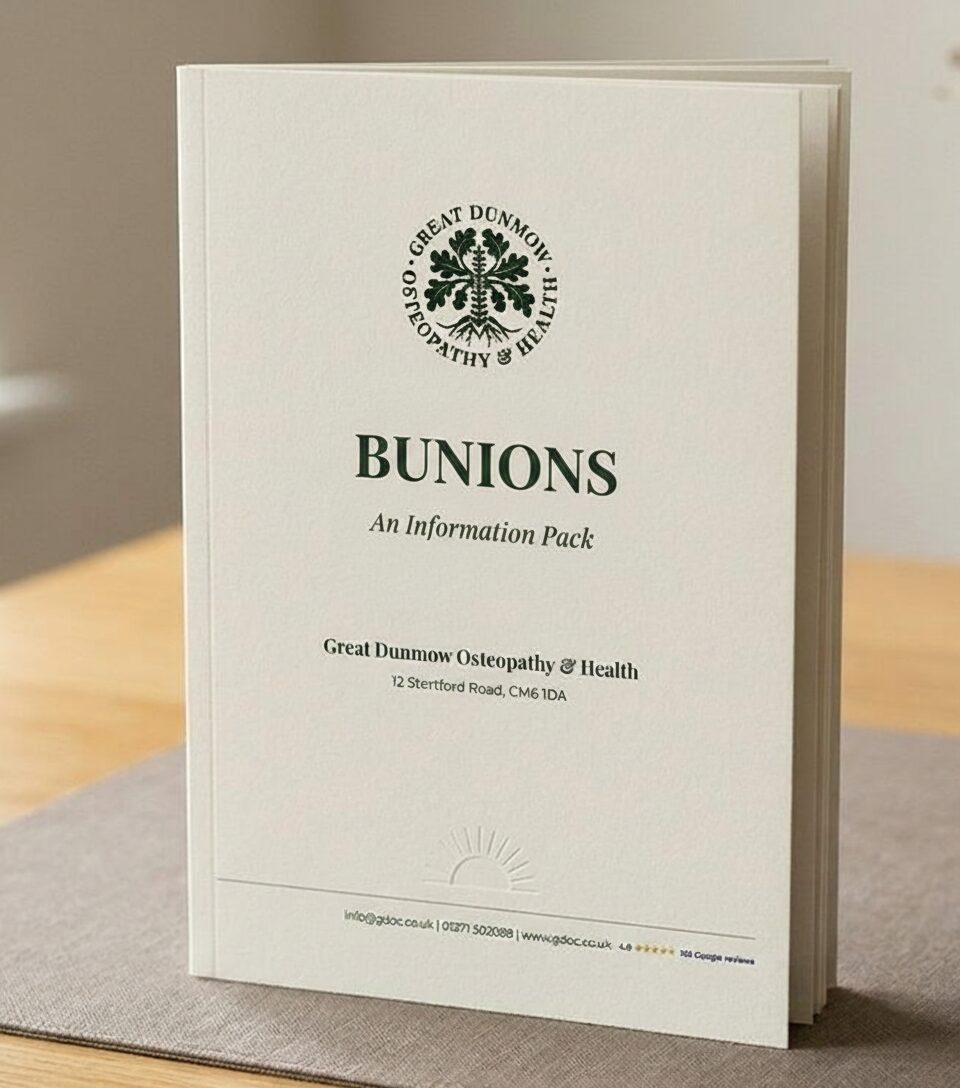
Receive a comprehensive information pack on Bunion Care Programme for bunions.
It covers how the treatment works, who it suits, what to expect from the programme and the published clinical evidence behind it.
Reviewed at your own pace, in complete privacy, before deciding next steps.
"How Do I Know If This Treatment Will Work For Me?"
The honest answer is, it depends on what is causing your bunions specifically.
Book a free phone consultation to find out!
In a quick chat we’ll give you a clear indication on whether Bunion Care Programme would suitable for your specific type of bunions, before you commit to a consultation.
It takes just 2-3 minutes.
Struggling with bunions and unsure how to move forward?
Arrange a bunions callback below where we can find out more about your symptoms and whether this treatment is suitable for you.
Request a Bunions Callback
Leave your details below and a member of our podiatry & chiropody team will aim to contact you within 24 hours.
What Happens Next
1
Hear from Us Today
A member of our podiatry & chiropody team will aim to contact you within 24 hours, in complete confidence.
2
Assess Your Suitability
Whilst we endeavour to help as many people as we can, we are unable to help everyone. We can determine your suitability for this treatment relatively quickly via a brief conversation, text, email, whatsapp or phone call, whichever you prefer.
3
Discuss Next Steps
We'll explain typical next steps and if you're eligible, invite you to schedule a consultation with our bunions specialist. No pressure to book and feel free to chat as much or as little as you'd like.
Why People Choose Us
-
20+ Years of
Local Care
We’ve proudly served the local community for over 20 years, helping patients across all aspects of foot, ankle and lower-limb health to feel and function better.
- Trusted By The Community
Our clinicians work alongside local GPs and consultants where appropriate, ensuring joined-up care for every patient.
-
5-Star Rated
(100+ Reviews)
Our patients consistently praise our care, with over 100 5-Star reviews on google celebrating the difference we make to their health and wellbeing.
- Thousands of Happy Patients
We have helped thousands of patients reclaim their confidence and quality of life. Real people, real results, treated with the same bunion care programme technology used in leading European foot care clinics.
- Specialist One-To-One Care
Every consultation is unhurried and clinician-led. You’ll work directly with a specialist who understands foot health – never rushed or treated as one of a queue.
- Friendly & Professional
Your records remain in our clinical system and are never shared with third parties without your authorisation. Appointments take place in dedicated treatment rooms.
- Comprehensive Foot Care
Heel pain, ingrown toenails, fungal nail infections, verrucas, bunions, corns, custom orthotics and diabetic foot care — all treated under one roof by clinicians who specialise in foot health.
- Convenient Opening Hours
We know your time is valuable, so the clinic is open Monday to Friday, 8:00am to 8:00pm – late appointments available so treatment fits comfortably around work and family life.
"How Do I Know If This Treatment Will Work For Me?"
Find out whether the bunions programme is right for you by booking a free phone consultation.

 Elaine Terry
Trustindex verifies that the original source of the review is Google.
I was lucky enough to see Charlotte about my old lady knees that have been dreadful lately and was fully expecting her to inform me that they need replacing. Instead she calmly and informatively explained what is going on and that by doing the exercises she fully demonstrated and got me to try and with regular ultrasound scans, I should regain full mobility with minimum pain. I will admit I was not particularly looking forward to the session, but after spending the time with Charlotte and having my questions answered thoroughly and being calmly advised, I am really hopeful that together we can help ensure I walk tall and hobble no more! Beth CracknellI have appointments here and it’s been a brilliant service, 8 years of pain from a car accident and 2 sessions of shockwave therapy and I can feel the difference!
 vincent thompsonExcellent service from Charlotte following a hip replacement which got me back to normal in record time. Many thanks. Vincent
 Nick BrownI struggled with plantar fasciitis for four months. A course of 6 sessions of shock wave therapy from Charlotte & Jason has made huge improvements. I'm back walking the golf course and largely untroubled by what was previously a chronic problem. I've received great care and treatment and would be happy to recommend.
 Kris YianniCurrently having treatment here for a plantar fasciitis issue and cannot recommend Charlotte enough. She is an absolute godsend and is amazing at what she does! Im having manual therapy currently and the pain is subsiding and im feeling soo much better after each session. Shes really knowledgeable and professional and im grateful for all the help she is providing me!
 Andrew GoodeyI’ve had 4 consultations with Charlotte due to my Knee and Plantar Fasciitis issues. So far, both are improving nicely Charlotte is both very knowledgable and friendly and manages to put one at ease with her easy going nature. Also impressed with the appointment reminders and the whole set up. I would certainly recommend to anyone Thanks Andy Goodey Rayne Braintree
 Tony & Diane BakerMy practitioner Charlotte, has continued the good work of this practice. Her observations of my stance and her listening capacity seem as important as the therapy she applies. In all these applied skills, find me at last in a good place. I have recommended her to my wife Diane and to a dear friend Shirley after a nasty fall in Spain. All will recommend Charlotte as their preferred Osteopath.. Grateful thanks. A. L. Baker.
 EA BI was assessed and by Charlotte who was really thorough and showed full understanding of my issue. Her treatment plan for me included shockwave therapy and exercises for me to do at home. I had sought help for plantar fasciitis from other professionals but Charlotte was by far the most thorough. I had 3 sessions and it has made a world of difference. I have recommended her to friends and I wouldn’t hesitate to seek her help again.
 Scott HFriendly staff and pleasant surroundings.
 Aaron WrightI’m 18 and a keen runner. After a big block of training I got a really stubborn knee injury that just didn’t seem to go away for months. I went to Great Dunmow Osteopathy & Health and did their knee pain programme which included focused shockwave therapy. I couldn’t believe how quickly the pain started to go away. That combined with a rehabilitation exercise programme Charlotte gave me meant I was pain free and back to running in just a few weeks! If you are in pain don’t waste anymore time, these guys will get you fixed very quickly.Verified by TrustindexTrustindex verified badge is the Universal Symbol of Trust. Only the greatest companies can get the verified badge who has a review score above 4.5, based on customer reviews over the past 12 months. Read more
Request Your Bunions Info Pack
Receive a comprehensive information pack on Bunion Care Programme for bunions.
It covers how the treatment works, who it suits, what to expect from the programme and the published clinical evidence behind it.
Reviewed at your own pace, in complete privacy, before deciding next steps.
Frequently Asked Questions
About The Treatment
A bunion (medically: hallux valgus) is a bony bump that forms at the base of the big toe. It develops over years as the big toe gradually drifts towards the second toe and the joint at the base of the big toe pushes outward. Bunions are more common in women, often run in families and can be made worse by tight, pointed footwear over many years.
Bunions develop from a combination of inherited foot shape and how the foot loads when you walk. Genetics is the biggest factor (if your mum or gran had them you're more likely to). Other contributors include flat feet, very flexible joints, decades of tight or high-heeled shoes and conditions like rheumatoid arthritis. Bunions are not caused by tight shoes alone but tight shoes worsen them once they've started.
The first sign is usually a small bump at the base of the big toe and shoes that feel tight on that side. Over time you'll notice pain in the joint (especially in shoes or after activity), redness or swelling around the bump, the big toe drifting towards the second toe and sometimes pain across the ball of the foot as weight distribution changes. Some people develop a smaller bump on the outside of the foot at the base of the little toe, known as a bunionette.
A clinical examination is usually sufficient. The podiatrist looks at the position of the big toe joint, range of motion, any tenderness, how the foot loads when you stand and walk and any related changes in the rest of the foot. For severe or surgical-stage bunions, X-rays are useful to see the precise angle of the bones.
We tailor the programme to the stage:
- Footwear assessment and recommendations
- Custom orthotics to offload the painful area and correct biomechanics
- Padding and toe spacers for symptom relief
- Targeted exercises and stretching to maintain joint mobility
- Pain management strategies for flare-ups
- Surgical referral and post-op support when conservative care isn't enough
No, conservative treatment can't reverse a bunion or change the underlying bone position. What it can do, very effectively, is reduce the day-to-day pain, slow further progression and keep you active and in normal shoes for longer. Many people with bunions live with them perfectly comfortably for decades with the right management. Only persistent severe pain or significant deformity typically warrants surgery.
Bunion surgery is usually considered when: pain is severe and affecting daily activities, you've exhausted conservative options without enough improvement, the deformity is severe or rapidly progressing, the second toe is being pushed out of alignment, or you can no longer find any comfortable footwear. Surgery is not done for cosmetic reasons or for mild bunions. We'll discuss timing and refer you to an orthopaedic foot surgeon when it's the right move.
Bunion correctors and splints don't reverse the bony deformity but they can help with comfort. Night splints can help maintain flexibility and reduce stiffness in the morning. Toe spacers ease pressure between the big toe and second toe. They're useful additions but they won't replace proper biomechanical assessment and custom orthotics for the underlying cause.
If bunions run in your family there's a higher chance. The good news is that catching early signs and using appropriate footwear, orthotics if needed and good foot hygiene from a young age can significantly slow progression. If you're worried about a child's foot development we're happy to do a biomechanical assessment to spot early signs.
For your first appointment, allow up to 60 minutes. This gives us enough time for a thorough history, examination and treatment in the same visit. Follow-up treatments are typically up to 30 minutes for the vast majority of cases. We'll confirm the exact length when you book.
No. You can book a podiatry appointment directly with us with no GP referral needed. We can write to your GP after your appointment if there's anything they should know.
Wear something comfortable that's easy to roll up to the knee. Bring the shoes you wear most often (we'll often look at how they're wearing for biomechanical clues). If you've had any imaging or test results related to your feet, bring those too. Otherwise just bring yourself.
Podiatry & chiropody is available at our Great Dunmow clinic at 12 Stortford Road, CM6 1DA. The clinic has on-site disabled parking available on request. Just give us a call ahead of your appointment.
Location
Our specialist foot health clinic is based in the heart of Great Dunmow, just a 2-minute walk from Chequers Lane car park. The clinic is private, fully accessible and discreetly located within our established Great Dunmow practice – a few minutes from the M11.